
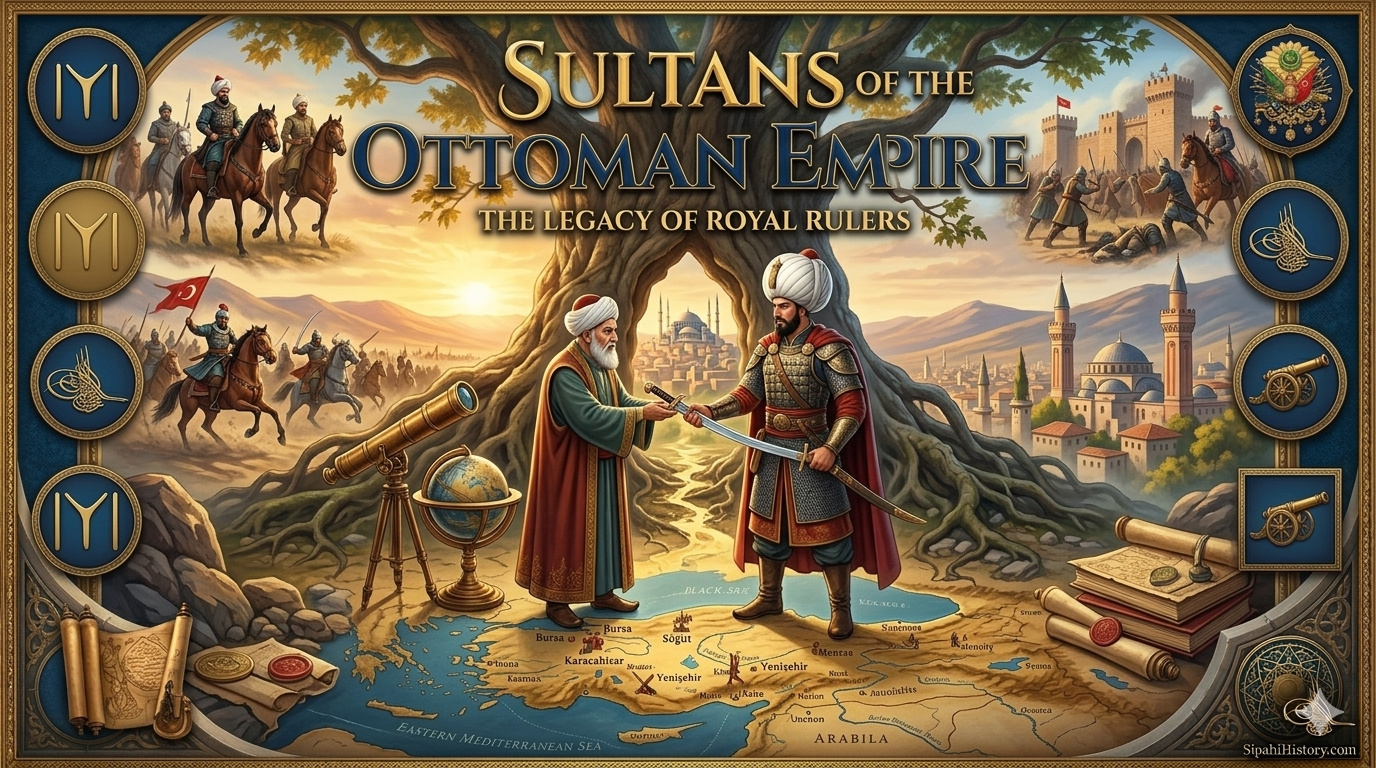
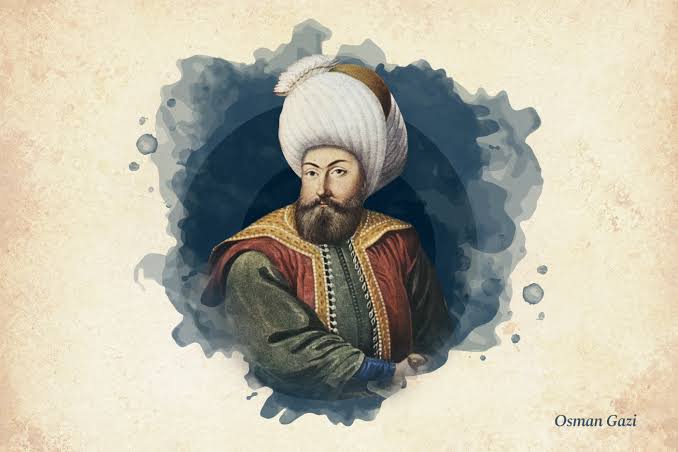
The transition of a small nomadic tribe into a world-dominating empire is one of the most fascinating chapters in human history. At the heart of this transformation was Osman Ghazi (also known as Osman I). His life, spanning from 1258 to 1326, was marked by visionary leadership, military brilliance, and a deep-rooted sense of justice. This article provides an in-depth look at the man who planted the seeds of the Ottoman “Plane Tree.” The Founder of the Magnificent Ottoman Empire A Complete History
1. The Historical Context: Anatolia in the 13th Century
To appreciate the achievements of Osman Ghazi, it is essential to understand the chaotic world into which he was born. The late 13th century saw the decline of two major powers:
- The Seljuk Sultanate of Rum: Once a mighty power in Anatolia, it was crumbling under the relentless invasions of the Mongols.
- The Byzantine Empire: The once-vast Roman successor was struggling with internal corruption, financial ruin, and territorial losses to Latin Crusaders and Turkic tribes.
In this power vacuum, various Turkic “Beyliks” (principalities) emerged. Osman’s tribe, the Kayi, was given a small piece of land in Söğüt by the Seljuks. This location was strategic; it was on the direct border of the Byzantine Empire, making it the perfect base for “Ghazwa” (holy struggle). The Founder of the Magnificent Ottoman Empire A Complete History
2. Lineage and Early Life: The Son of Ertugrul Ghazi
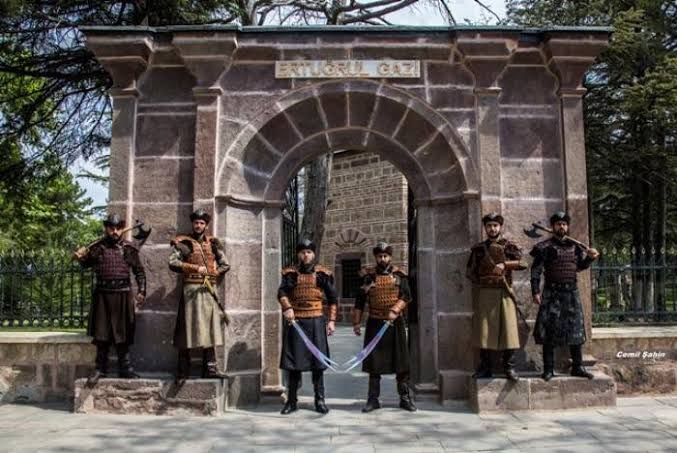
Osman was born in 1258, the same year the Mongols destroyed Baghdad. He was the son of Ertugrul Ghazi, a legendary chieftain of the Kayi tribe. From his youth, Osman was mentored by his father and the brave “Alps” (warriors) like Turgut, Bamsi, and Konur. The Founder of the Magnificent Ottoman Empire A Complete History
He was raised with the Ghazi Spirit—a combination of martial skill and a religious mission to spread justice. After the death of Ertugrul Ghazi in 1281, Osman was chosen as the Bey of the tribe, despite his young age, due to his exceptional wisdom and bravery.
3. The Foundation of Ideology: The Dream of Osman
Every great empire starts with a vision. For the Ottomans, this vision was “Osman’s Dream.” According to historical chronicles, while staying at the house of the Sufi Master Sheikh Edebali, Osman had a profound dream. The Founder of the Magnificent Ottoman Empire A Complete History
He saw a crescent moon rising from the chest of Edebali and entering his own heart. Immediately, a massive plane tree sprouted from his navel, its branches covering the horizons of the world. Under its shade, mountains rose, and rivers flowed, providing life to millions.
Sheikh Edebali interpreted this dream as a divine sign: “Osman, my son, God has given the sovereignty to you and your descendants.” This dream became the spiritual constitution of the Ottoman Empire, linking the ruling family with the blessing of religious scholars.
4. The Rise to Sovereignty (1299 AD)
For many years, Osman operated as a vassal of the Seljuks. However, in 1299, after the Seljuk Sultan was ousted by the Mongols, Osman declared his independence. This year is officially recognized as the birth of the Ottoman State.
- The First Sermon (Khutbah): He had the Friday sermon read in his name, a traditional sign of Islamic sovereignty.
- The First Coin: He minted the first Ottoman coin, establishing an independent economy.
5. Military Tactics: The Sword of Islam
Osman Ghazi was a pioneer in Asymmetric Warfare. He knew he couldn’t defeat the Byzantine Empire in one day, so he used a “Starvation Policy.”
- Capture of Fortresses: He systematically captured smaller fortresses like Karacahisar, Yarhisar, and Bilecik.
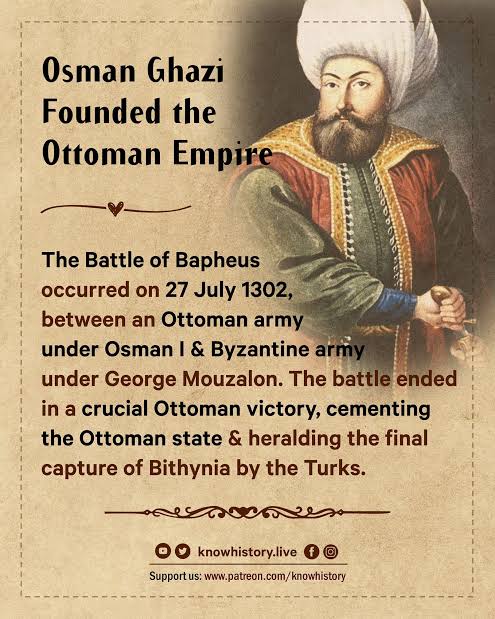
- Battle of Bapheus (1302): This was his first major confrontation with a professional Byzantine army. His victory sent shockwaves through Constantinople and established him as a true Sultan in the eyes of the Islamic world.
- The Siege of Bursa: Osman’s greatest goal was Bursa. He realized the city was too strong for a direct assault, so he built two towers around it to cut off all supplies. The siege lasted for nearly 20 years, showing Osman’s incredible patience.
6. Social Justice: The Secret of Ottoman Growth
One of the most frequent questions historians ask is: Why did Christian locals support a Muslim conqueror?
The answer lies in Justice (Adalah). Osman Ghazi abolished the heavy taxes imposed by Byzantine governors. He protected the rights of traders, regardless of their religion. This policy, known as Istimalet, encouraged thousands of Greeks and Balkans to embrace Ottoman rule willingly.
7. The “Will” of Osman Ghazi (Osman’s Testament)
As Osman lay on his deathbed in 1326, he gave his son Orhan Ghazi a set of instructions that would guide the empire for centuries. He said:
“My son, never neglect the laws of God. Be just and merciful. Protect the scholars so that the law of the state remains firm. Do not be proud of your strength, for the strength belongs to God.”
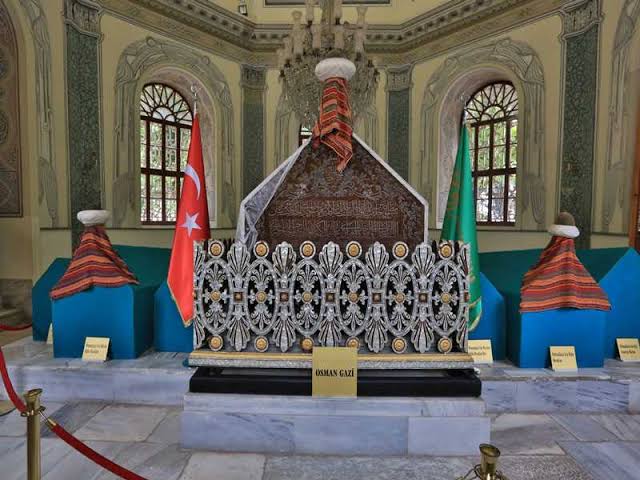
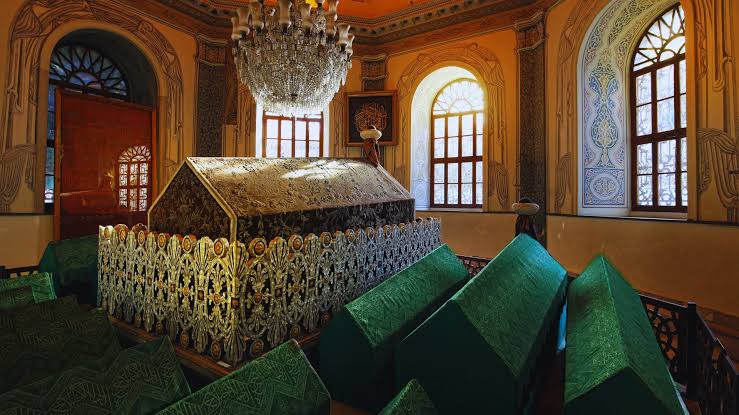
He also requested to be buried in Bursa, which was captured by Orhan just days before his father’s passing. His tomb, the Gümüşlü Kumbet, remains a site of pilgrimage today.
8. Family and Personal Life
Osman was a man of simplicity. It is recorded that when he died, he left no gold or silver. His worldly possessions consisted only of:
- A wooden spoon.
- A salt shaker.
- A pair of boots.
- A few fine horses.
- One set of new clothes.
- The Sword of Osman, which became a symbol of office for every future Sultan.
He had two wives, Malhun Hatun (daughter of Omer Bey) and Bala Hatun (daughter of Sheikh Edebali). His sons, particularly Orhan and Alaeddin, continued his mission with the same zeal.
9. Conclusion: A Legacy that Shaped the World
Osman Ghazi was more than just the first Sultan; he was the embodiment of a new civilization. He combined the nomadic bravery of the steppes with the settled justice of Islamic law. From a small tribe of 400 tents, he created a legacy that protected the Islamic world for 600 years and produced architectural, scientific, and cultural wonders.
Today, as we look back at his life, Osman Ghazi stands as a symbol of how vision, faith, and justice can turn a small dream into a global reality.