
Introduction: The Dawn of a Superpower
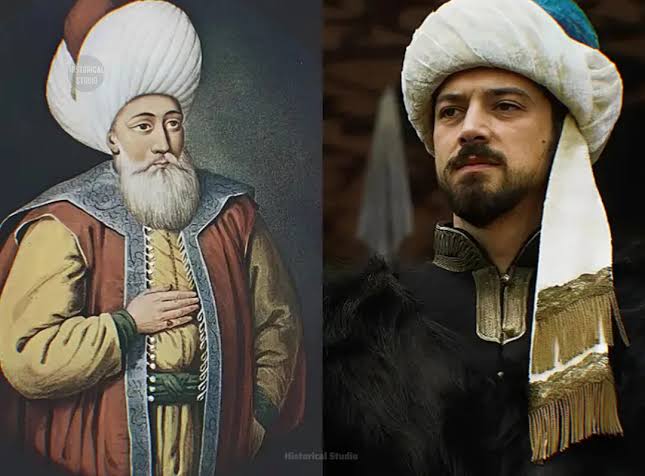
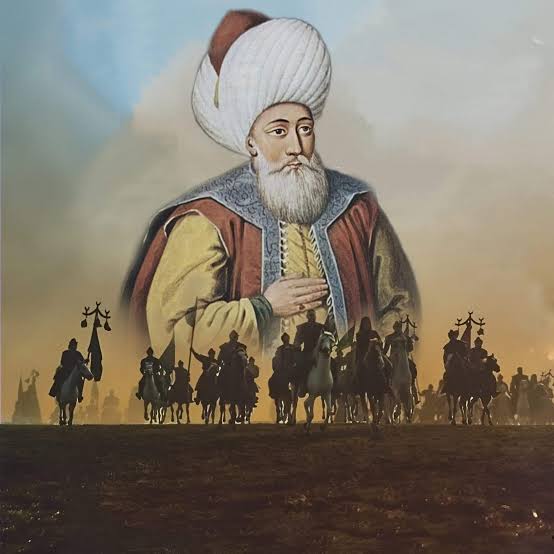
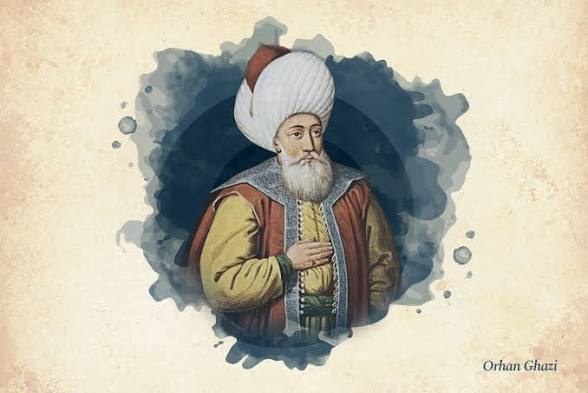
While Osman Ghazi was the charismatic visionary who dreamt of a grand Islamic state, it was his son, Sultan Orhan Ghazi, who provided the structural integrity, legal framework, and military discipline required to turn that dream into a multicontinental reality. Ruling for thirty-six years (1326–1362), Orhan Ghazi did not just expand borders; he created a civilization. His era marks the transition of the Ottomans from a frontier “Beylik” (principality) to a “Sultanate” that would eventually challenge the greatest empires of history. Sultan Orhan Ghazi: The True Architect and Sovereign of the Ottoman Empire
The Formative Years: A Legacy of Valor
Born in the rugged terrains of Söğüt around 1281, Orhan was a child of the marches. He grew up hearing the clashing of swords and the spiritual discourses of Sheikh Edebali. This dual upbringing—one of the blade and one of the book—forged a ruler who was as comfortable in a scholar’s library as he was in a military saddle. Under his father’s command, he led several raids against Byzantine forts, learning the terrain of Bithynia like the back of his hand. This experience was crucial because it taught him that brute force alone could not take fortified cities; one needed patience, logistics, and the hearts of the local people. Sultan Orhan Ghazi: The True Architect and Sovereign of the Ottoman Empire
The Epic Siege of Bursa (1317–1326)
Bursa was the “Glistening Apple” of the Byzantines in Anatolia. It was a city protected by massive walls and the natural fortress of Mount Uludağ. The siege lasted nearly a decade, a testament to Orhan’s persistence.
The Strategy of Attrition
Orhan did not attempt a suicidal frontal assault. Instead, he built two forts overlooking the city to cut off all supply lines. For years, he choked the city’s economy until the Byzantine governor, realizing that no help was coming from Constantinople, surrendered.
The Transformation of a Capital
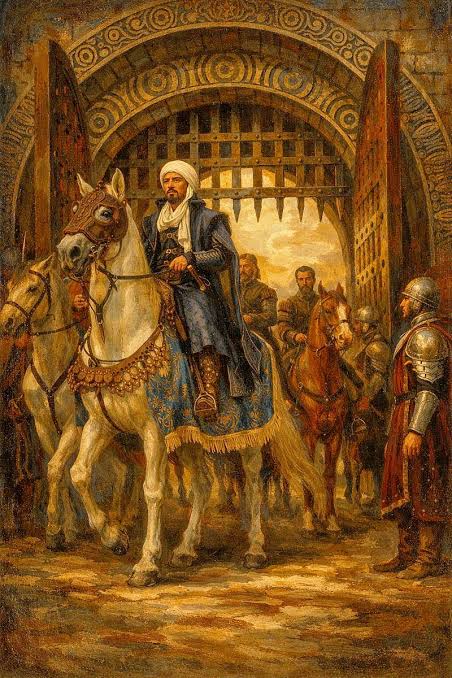
Upon entering Bursa, Orhan did something revolutionary. Instead of pillaging, he guaranteed the safety of every citizen. He converted the main church into a mosque but allowed the Christians to continue their trades. Bursa became the heart of the Ottoman world. He built the Orhan Gazi Mosque and the Emir Han, establishing a commercial infrastructure that made the city a center for the silk trade—a status it held for centuries. Sultan Orhan Ghazi: The True Architect and Sovereign of the Ottoman Empire
The Battle of Pelekanon (1329): Breaking the Imperial Will
The Byzantine Emperor Andronikos III could not ignore the loss of Bursa. He gathered an elite imperial army to reclaim Anatolia. Orhan Ghazi met him at Pelekanon.
A Tactical Masterclass
Orhan used the classic “Crescent” formation of the Steppe warriors. He drew the Byzantine heavy infantry into a trap using feigned retreats. When the Emperor was wounded in the leg by an arrow, panic spread through the Byzantine ranks. The imperial army fled, marking the last time a Byzantine Emperor would lead a campaign on Anatolian soil. This battle signaled the end of Byzantine hopes in Asia.
Expanding the Frontiers: Nicaea and Nicomedia
With the Emperor defeated, the remaining Byzantine cities were isolated.
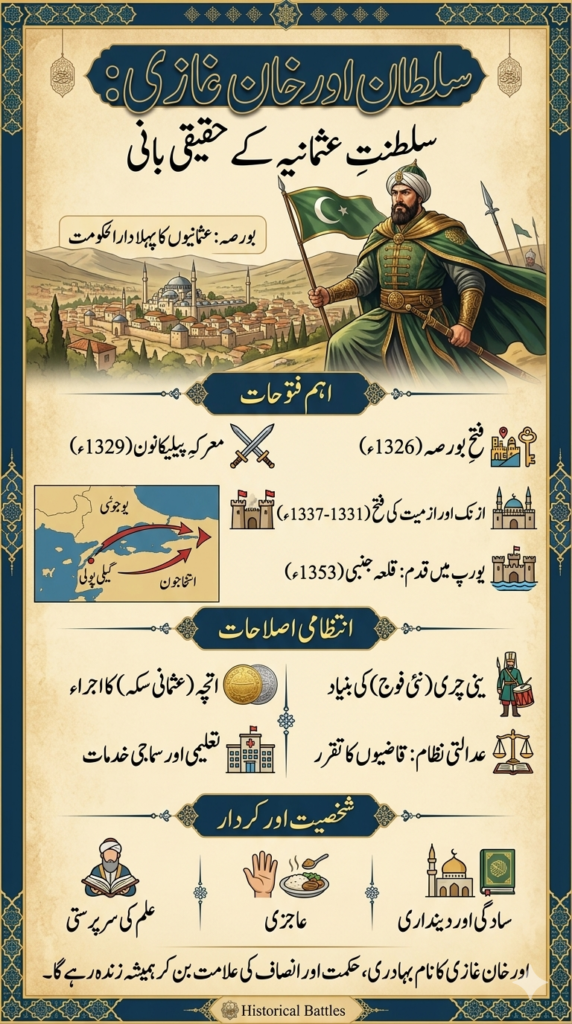
- Nicaea (Iznik) 1331: Known for its religious councils, its fall was a massive psychological blow to Christendom. Orhan established the first Ottoman madrasa here, appointing the great scholar Davud of Caesarea as its rector.
- Nicomedia (Izmit) 1337: Its capture gave the Ottomans a strategic port on the Gulf of Astacus, allowing them to start building their first naval vessels.
The Revolutionary Aladdin Pasha Reforms
Orhan was fortunate to have his brother, Aladdin Pasha, as his Vizier. Together, they realized that a growing state could not rely on seasonal volunteer cavalry. Sultan Orhan Ghazi: The True Architect and Sovereign of the Ottoman Empire
1. The Standing Army (Janissaries)
They created the Yeniçeri (New Soldiers). Unlike the feudal lords of Europe, these soldiers were professionals. They were trained from youth, lived in barracks, and were experts in archery and siege warfare. This provided the Sultan with a loyal force that did not depend on tribal politics.
2. The Civil Administration
They divided the state into Sanajks (districts) and appointed Qadis (judges) and Subashis (police chiefs). This was the first time in the region that a centralized government provided security and justice at the local level.
3. The Monetary System
Orhan minted the Akçe. This silver coin replaced the debased Byzantine currency and made the Ottoman state an independent economic actor in Mediterranean trade.
The European Bridgehead: Crossing the Dardanelles
Orhan’s most visionary move was eyeing the Balkans. Through a complex alliance with the Byzantine usurper John VI Kantakouzenos, Orhan’s son, Suleiman Pasha, was sent to Europe to provide military aid.
The Gift of Tsympe
In 1353, for his services, the Ottomans were given the Castle of Tsympe. This was a tiny fort, but it was the first Islamic soil in Europe. Sultan Orhan Ghazi: The True Architect and Sovereign of the Ottoman Empire
The Gallipoli Earthquake (1354)
A year later, a massive earthquake leveled the walls of Gallipoli. Suleiman Pasha, seeing this as a divine sign, occupied the city and quickly settled Turkish families there. When the Byzantine Emperor complained, Orhan famously replied, “The gates were opened by God, not by my soldiers.” Gallipoli became the staging ground for the conquest of Thrace, Bulgaria, and eventually Serbia.
The Social Welfare State: “Vakıf” System
Orhan Ghazi was a pioneer of the Vakıf (Endowment) system. He believed that the wealth of the state belonged to the poor. He established “Imarets” (public kitchens) where anyone—Muslim or Christian—could eat for free. He built bathhouses (Hamams), hospitals, and inns for travelers. This “soft power” was more effective than the sword; it convinced the local Greek populations that Ottoman rule brought more stability and lower taxes than the decaying Byzantine bureaucracy. Sultan Orhan Ghazi: The True Architect and Sovereign of the Ottoman Empire
Relationship with the Scholar Class
Orhan was deeply influenced by the Ahi Brotherhood, a guild of craftsmen and spiritual leaders. He never made a major move without consulting the “Ulama” (scholars). This established a tradition where the Ottoman Sultan was not just a king, but a protector of the Faith and a patron of the arts. He invited scholars from Iran, Egypt, and Central Asia to Bursa, making it a rival to Cairo and Baghdad. Sultan Orhan Ghazi: The True Architect and Sovereign of the Ottoman Empire
Personal Life and Death
Orhan married several times for political stability, most notably to Nilüfer Hatun (a Byzantine noblewoman) and Theodora (daughter of the Byzantine Emperor). Nilüfer Hatun became a beloved figure, known for her charity work in Bursa.
Orhan Ghazi lived a long and fruitful life. He saw the transition of his people from warriors of the frontier to masters of a transcontinental empire. He died in 1362, likely of old age, shortly after the tragic death of his favorite son, Suleiman Pasha. He was buried in a domed tomb in Bursa, overlooking the city he loved.
The Final Verdict: The Soul of the Empire
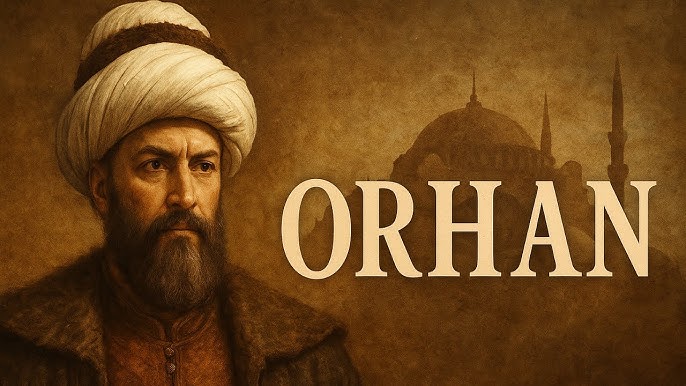
If Osman Ghazi provided the seed, Orhan Ghazi provided the soil and the water. He was the one who gave the Ottoman Empire its distinct character: a mix of Turkish tribal valor, Islamic legalism, and Byzantine administrative sophistication. He was a “Sultan” before the world called him one. His legacy is not just the land he conquered, but the 600-year-old dynasty he secured through his wisdom, his reforms, and his unwavering faith. Sultan Orhan Ghazi: The True Architect and Sovereign of the Ottoman Empire