
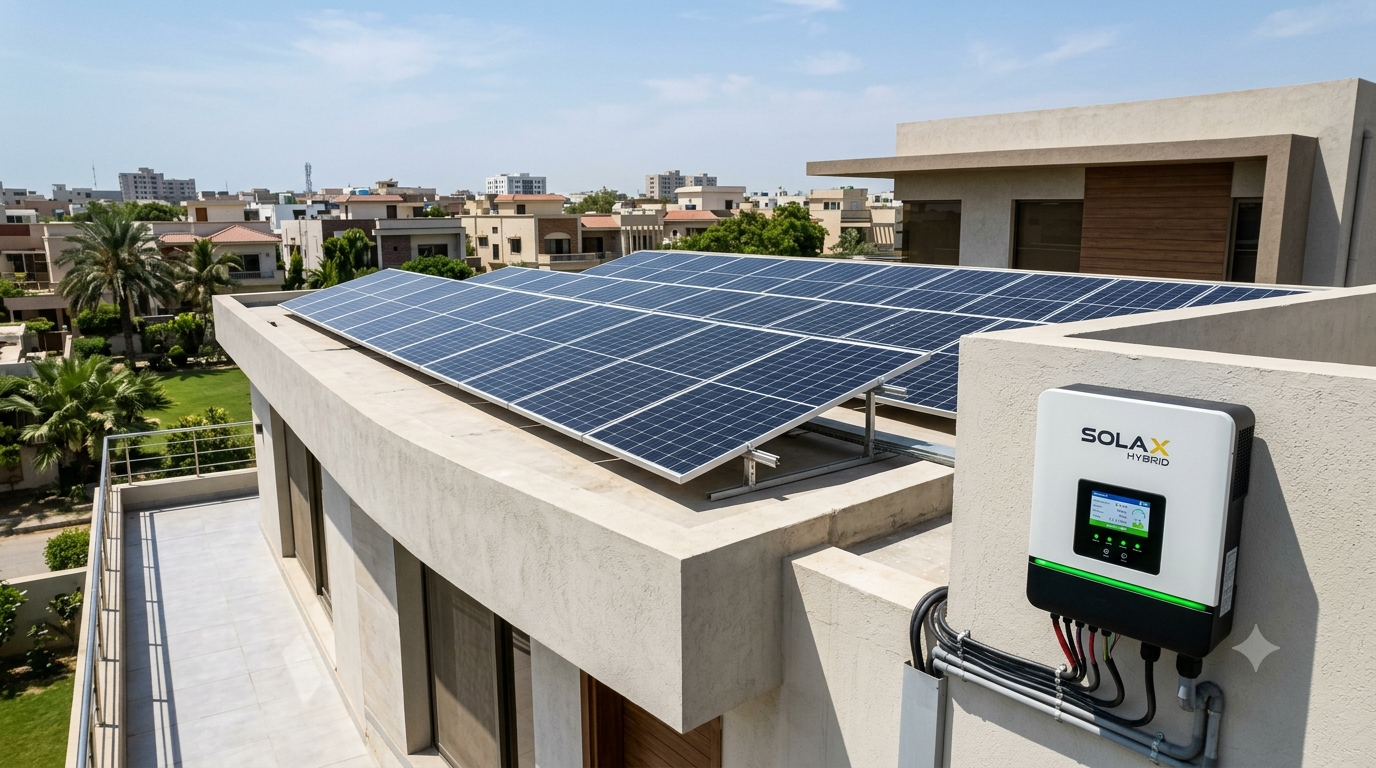
I still remember the exact moment I decided to pull the plug on my traditional grid dependency. It was mid-summer, the temperature in Lahore was pushing a brutal 46°C, and the power went out for the third time that afternoon. A few days later, the monthly WAPDA bill arrived, and it looked more like a luxury resort invoice than a utility bill. I stood there staring at the numbers, completely fed up.If you live anywhere in Pakistan—whether it’s Karachi, Lahore, or Islamabad—you know exactly what I’m talking about. With per-unit electricity rates constantly climbing and regular load shedding turning our afternoons into sweat-boxes, solar energy has shifted from being a “green luxury” to an absolute survival tool for the middle class.But when I first started looking into going solar, I was instantly overwhelmed by the wild west of the local market. Shady dealers quoting random rates, confusing technical terms like P-type, N-type, and Bifacial, and a massive fear of getting scammed with counterfeit B-grade plates.I’ve spent months researching, dealing with solar installers, making mistakes, and finally setting up a system that actually wiped out my electricity bill. If you want to break free from the crushing weight of high power bills, let’s look at how the solar landscape stands right now in Pakistan, which panel companies are genuinely worth your hard-earned cash, and the real costs you can expect. Solar panels system in Pakistan Solar panels system in Pakistan
The Ground Reality of Solar in Pakistan Right Now
The solar market in Pakistan has experienced a massive rollercoaster ride. Back in late 2022, solar panels were treated like gold, with prices skyrocketing to nearly Rs. 140 per watt due to strict import restrictions and hyper-inflation.
Fast forward to the current market, and the situation is completely different. Global production surges—especially out of manufacturing hubs in China—combined with relaxed local import policies have caused panel prices to plummet to their lowest levels in years. Right now, premium Tier-1 solar panels are floating anywhere between Rs. 39 to Rs. 48 per watt. Solar panels system in Pakistan
However, don’t let the low base price fool you into thinking a complete setup is dirt cheap. While the raw panels have become highly affordable, the overall system price includes specialized hybrid or on-grid inverters, heavy-duty structural framing, safety distribution boxes, high-gauge copper wiring, and the infamous net metering licensing process. Solar panels system in Pakistan
Additionally, the government frequently debates structural changes to net-metering regulations, making it absolutely vital to install your system correctly today so you can lock in your benefits before policy updates occur. Solar panels system in Pakistan Solar panels system in Pakistan
The Rookie Mistakes I Made (And How to Avoid Them)
When I first jumped into the market, I thought buying a solar system was like buying an air conditioner: you buy the box, plug it in, and walk away. That ignorance cost me time and money. Here are the biggest blunders you need to avoid: Solar panels system in Pakistan Solar panels system in Pakistan
1. Falling for the “B-Grade” Paper Trick
The biggest threat in the Pakistani solar market is the abundance of re-labeled or B-grade panels. Shady local vendors buy lower-grade panels that failed factory stress tests, slap a counterfeit premium brand sticker (like LONGi or Jinko) on them, and sell them at a slight discount.
Always demand a documented, traceable serial number that you can verify directly on the manufacturer’s official global portal. If a dealer refuses to give you the official English datasheet or local warranty papers, walk away instantly. Solar panels system in Pakistan Solar panels system in Pakistan
2. Buying Outdated Panel Technology
When I was collecting quotes, one vendor offered me an unbelievably cheap rate for a set of 540W plates. Luckily, I dug into the specs before signing the check. They were trying to clear out old PERC (P-type) inventory. Solar panels system in Pakistan
The current standard in Pakistan is N-Type TOPCon or HPBC technology. These newer generation panels offer vastly superior low-light performance (crucial for hazy or smoggy winter days in Punjab) and degrade at a much slower rate over a 25-year lifespan. Solar panels system in Pakistan Solar panels system in Pakistan
3. Skimping on the Inverter and Cabling
Everyone focuses on the solar plates, but the inverter is the actual brain of the operation. I watched a neighbor install top-of-the-line panels but pair them with a cheap, unbranded hybrid inverter and low-grade aluminum wiring to save a few thousand rupees. Three months later, during a heavy voltage surge, the internal board fried, leaving his house dark for a week. Invest in IP65-rated, trusted inverter brands. Solar panels system in Pakistan Solar panels system in Pakistan
Top Solar Panel Companies in Pakistan: Real Rates
To save you from the hassle of dealing with conflicting market quotes, here is a clean, honest breakdown of the best Tier-1 solar panel companies operating in the country right now, along with their current market rates: Solar panels system in Pakistan
| Brand & Model Line | Cell Tech Type | Avg. Price Per Watt (PKR) | Avg. Cost Per 585W Panel (PKR) |
|---|---|---|---|
| Jinko Solar (Tiger Neo N-Type) | N-Type TOPCon | Rs. 40 – Rs. 45 | Rs. 24,000 – Rs. 26,000 |
| LONGi Solar (Hi-MO 7 / X10) | HPBC 2.0 / N-Type | Rs. 42 – Rs. 48 | Rs. 25,008 – Rs. 28,000 |
| Canadian Solar (BiFacial TOPCon) | N-Type TOPCon | Rs. 41 – Rs. 49 | Rs. 25,500 – Rs. 29,000 |
| Trina Solar (Vertex N Series) | N-Type / Mono | Rs. 39 – Rs. 43 | Rs. 24,000 – Rs. 25,500 |
| JA Solar (DeepBlue 4.0 Pro) | N-Type Bifacial | Rs. 40 – Rs. 45 | Rs. 24,800 – Rs. 26,500 |
| Note: The per-panel cost can vary slightly depending on whether you are buying a single panel for a small budget setup or buying in bulk (10+ plates) for a complete home system where distributors offer wholesale discounts. |
Which Brand Should You Choose?
- For Peak Efficiency & Space Crises: If your roof space is heavily limited or partially shaded by nearby buildings, go for LONGi’s Hi-MO X10 or AIKO’s ABC N-Type panels. Their anti-shading and anti-dust optimizations mean you get more raw wattage out of fewer square feet.
- The Ultimate Value Picks: Jinko Tiger Neo and Trina Vertex N are the undisputed workhorses of the Pakistani market right now. They provide an exceptional balance of price-to-performance, are universally supported by all major hybrid inverters, and are highly favored by local net-metering inspectors. Solar panels system in Pakistan
The Real Cost of a Complete System Setup
When you budget for solar, you need to look at the total “all-in” installation price rather than just calculating the price of the raw plates.
Here is what the verified market shows for fully functional, professional installations including high-grade mounting structures, safety AC/DC breakers, earthing pits, and labor fees: Solar panels system in Pakistan
3 kW Hybrid System (Small Home)
- Best For: Running a 1-ton inverter AC, a refrigerator, fans, and lights during the day.
- Estimated Cost: Rs. 350,000 to Rs. 450,000 (Prices scale upward if you opt for premium Lithium-ion battery backups). Solar panels system in Pakistan
5 kW to 6 kW Hybrid System (Medium Home)
- Best For: A standard double-story house running a 1.5-ton inverter AC constantly, a water pump, home appliances, and full daytime load backup.
- Estimated Cost: Rs. 600,000 to Rs. 800,000.
10 kW On-Grid / Hybrid System (Large Home / Heavy Load)
- Best For: Running multiple inverter ACs simultaneously, heavy appliances, and generating a massive amount of excess units to export back to the grid via net metering.
- On-Grid Total Cost: Rs. 1,000,000 to Rs. 1,300,000.
- Hybrid Total Cost (With Batteries): Rs. 1,500,000 to Rs. 2,100,000.
Step-by-Step Guide to Going Solar Smoothly
If you want to transition your home to solar power without getting ripped off by local vendors, follow this practical operational sequence:
- Analyze Your Past 12 Months of Electricity Bills
Look at your bills to find your “Peak Month Units.” A household consuming roughly 600 to 700 units a month during peak summer requires a well-optimized 5 kW to 6 kW system to comfortably drop the bill to zero. - Get a Structural Roof Evaluation
Before buying equipment, have an engineer verify your roof type. If you have a flat concrete roof, you’ll need standard elevated structures. If you have a sloped sheet roof, customized mounting brackets are required to prevent wind lift during monsoon storms. - Select an AEDB Certified Installer
Never hire a generic neighborhood electrician to design your solar array. Choose an installer certified by the Alternative Energy Development Board (AEDB). This ensures they can legally process your NEPRA net-metering application without unnecessary red tape delays. - Insist on Surge Protection Devices (SPDs)
Make sure your installer includes dedicated SPDs in the distribution box. Lightning strikes and local grid fluctuations are common in Pakistan; a couple of safety fuses can save your expensive hybrid inverter from turning into scrap metal. Solar panels system in Pakistan
Final Thoughts
Making the switch to solar in Pakistan can feel like a massive financial leap, but given the trajectory of traditional utility prices, it is one of the safest investments you can make for your home. With payback periods dropping down to just 3 to 4 years, a properly installed system essentially gives you free electricity for the remaining two decades of its operational life.
Don’t sit around waiting for prices to drop to absolute zero. Every single month you spend hesitating is another month spent paying exorbitant bills to your local distribution company. Find a verified installer, verify your serial numbers, and take control of your home’s energy today. Solar panels system in Pakistan